



Electrosurgery (Coltène Whaledent, U.S.A)
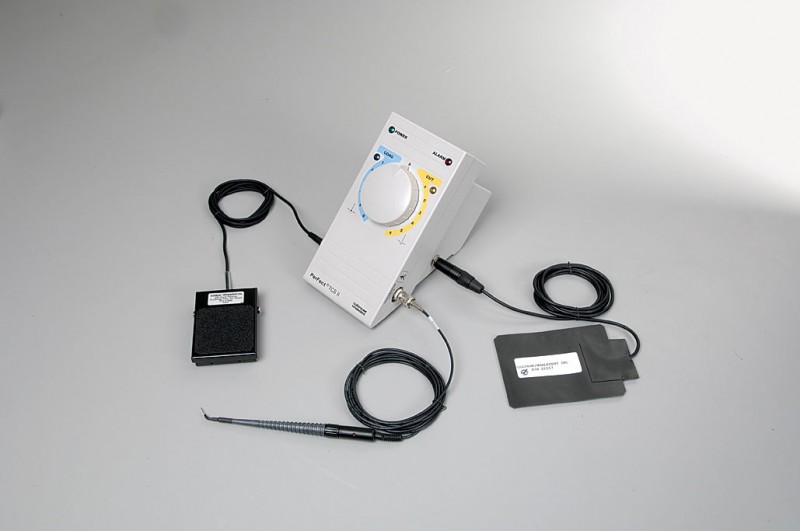
Three methods of cutting oral soft tissue are used commonlyin dentistry: scalpel, electrosurgery and laser. Each of thesemethods works. However, they are different from the standpointsof hemostasis (arrest of bleeding), healing time and cost of instruments.
Cutting soft tissue with a scalpel is a technique used by everydentist. Disadvantages of cutting soft tissue with a scalpel, includingexcessive blood flow.
Electrosurgery is a controlled, precise application of heatto the soft-tissue site to be cut, achieved by means of carefullydesigned electrodes. The result is a controlled, irreversiblethermal alteration of the soft tissue.
Electrosurgery are used for:
- exposing impacted tooth
- operculectomy (removal of soft tissue covering impacted tooth)
- gingivectomy (removal of gingival tissue)
- gingivoplasty (recontouring gingival tissue)
- tissuemanagement for fixed prosthodontics
- increasing accessfor restorations and crown build-up
- crown lengthening
- periodontal pocket reduction
- frenectomy
These are the advantages of electrosurgery:
- cuts are made with ease when the device is set correctly
- hemostasis is immediate (minimal bleeding)
- cutting is consistent
- the wound is nearly painless after the procedure
- the soft tissue has minimal trauma;
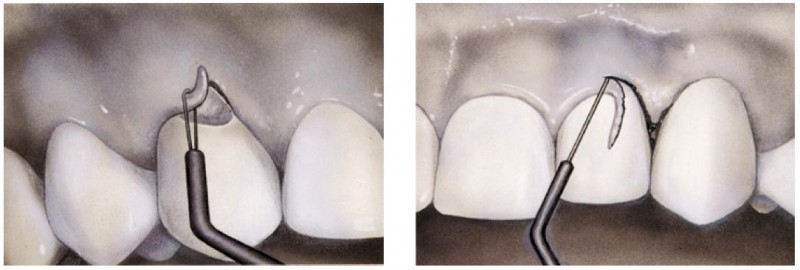
Crown lengthening procedure utilising electrosurgery